An Introduction

What Is the Gosho?

The Gosho (御書) — meaning “honored writings” — is the collected writings of Nichiren Daishonin (1222–1282), the 13th-century Japanese Buddhist monk who established the practice of chanting Nam-myoho-renge-kyo. These writings include letters to individual followers, doctrinal treatises, and formal remonstrances to the government.

Nichiren wrote to people from all walks of life — samurai retainers, widowed mothers, ailing followers, priests, and government officials — offering encouragement, doctrinal clarification, and practical life guidance rooted in the Lotus Sutra. The Gosho is not a distant theological text; it is a living dialogue between teacher and student, as relevant today as it was in 13th-century Japan.

The complete English translations are available through the Nichiren Buddhism Library.

The Two Primary Compilations

I

The Writings of Nichiren Daishonin, Vol. I (WND-1)

172 writings including major treatises, personal letters, and doctrinal works. The most frequently studied volume in SGI.

II

The Writings of Nichiren Daishonin, Vol. II (WND-2)

Writings 173–406 — additional letters, doctrinal works, and shorter correspondence providing deeper context.

Nichiren Buddhism Library

Complete English translations of WND Volumes I & II — free and searchable online.

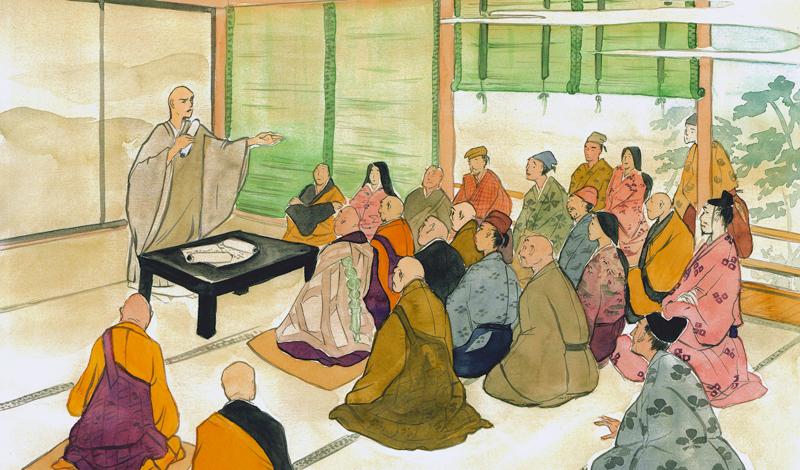
Artistic depiction of Nichiren Daishonin proclaiming Nam-myoho-renge-kyo in 1253

Nichiren Daishonin proclaiming his teaching, 1253 — the Gosho documents his entire journey from this moment through his passing in 1282.

The Three Pillars

Faith, Practice & Study

In Nichiren Buddhism, three pillars sustain and deepen one's Buddhist practice. They are inseparable — like the three legs of a tripod. Remove one, and the practice collapses.

Faith (Shin)

Faith in Nichiren Buddhism is not blind belief. It is the conviction that every person possesses the Buddha nature and that chanting Nam-myoho-renge-kyo activates that innate potential. Faith is the engine of transformation — the spark that ignites change.

“Buddhahood lies in continuing faith — the courage to persist despite adversity.”

— The Difficulty of Sustaining Faith

Practice (Gyō)

Practice has two dimensions: practice for oneself — chanting Nam-myoho-renge-kyo and performing gongyo — and practice for others, expressed through sharing Buddhism with those around you through dialogue, encouragement, and the example of one's own transformation.

“Regard both suffering and joy as facts of life and continue chanting no matter what happens.”

— Happiness in This World

Study (Gaku)

Study means deepening one's understanding of Nichiren's teachings, the Lotus Sutra, and the guidance of the Soka Gakkai presidents. Study illuminates the path of faith and practice, providing the wisdom to understand why we practice and how to apply Buddhism to real-life challenges.

“The heart of strategy derives from the Mystic Law — wisdom for navigating life's battles comes from deepening one's connection to the Buddhist teachings.”

— The Strategy of the Lotus Sutra

These three are not separate activities. Faith without practice becomes abstract. Practice without study becomes routine. Study without faith becomes mere intellectualism. Together, they create a dynamic cycle of growth.

The Five Major Writings

Five Major Treatises

These five treatises are considered the most important doctrinal works in the Gosho, each addressing a foundational pillar of Nichiren Buddhism.

WND-1, No. 2Major Writing

On Establishing the Correct Teaching for the Peace of the Land

Written to
Hōjō Tokiyori (the retired regent)
Date
1260 · Kamakura

Nichiren's first major remonstrance to the government. Written as a dialogue between a host and a traveler, it argues that disasters plaguing Japan stem from the nation's reliance on erroneous Buddhist teachings. This established Nichiren's role as a social critic and the principle of rissho ankoku — establishing the correct teaching for the peace of the land.

Individual spiritual practice and societal peace are inseparable.

WND-1, No. 39Major Writing

The Object of Devotion for Observing the Mind

Written to
Toki Jōnin
Date
1273 · Sado

One of Nichiren's five major writings. It explains the theoretical basis for the Gohonzon — the object of devotion in Nichiren Buddhism — and elucidates the principle of three thousand realms in a single moment of life (ichinen sanzen) as it applies to ordinary people in the Latter Day of the Law.

The Gohonzon as the mirror of our own Buddha nature.

WND-1, No. 66Major Writing

The Selection of the Time

Written to
Yui
Date
1275 · Minobu

One of the five major writings. Nichiren examines the relationship between Buddhist teachings and the time period in which they must be propagated. He argues that Nam-myoho-renge-kyo is the correct practice for the Latter Day of the Law — our current age — and that spreading this practice fulfills the purpose of Buddhism in this era.

The correct teaching for the correct time — this is the Mystic Law.

WND-1, No. 30Major Writing

The Opening of the Eyes

Written to
Shijō Kingo (and all followers)
Date
1272 · Sado

One of the five major writings. Written during Nichiren's harsh exile on Sado Island, it identifies him as the votary of the Lotus Sutra who fulfills the sutra's prophecies. It addresses the fundamental question: if the Lotus Sutra is true, why does its votary suffer? Nichiren's answer establishes that persecution itself is proof of correct practice.

The votary of the Lotus Sutra must be willing to give his life for the Law.

WND-1, No. 88Major Writing

On Repaying Debts of Gratitude

Written to
Jōken-bō / Gijō-bō
Date
1276 · Minobu

One of the five major writings. Nichiren examines the concept of gratitude — to parents, teachers, sovereign, and the three treasures of Buddhism. He teaches that the highest form of repaying one's debts of gratitude is to practice and propagate the correct teaching, thereby enabling others to attain enlightenment.

True gratitude is expressed through the practice and propagation of the correct teaching.

Organized by Theme

Key Gosho by Theme

The following writings are among the most frequently studied in SGI discussion meetings and individual practice, organized by their central teaching.

Fundamentals of Practice

The core writings that establish the doctrinal and spiritual foundation of Nichiren Buddhism.

WND-1, No. 1

On Attaining Buddhahood in This Lifetime

Written to
Toki Jōnin
Date
1255 · Kamakura

One of Nichiren's earliest and most essential writings. It establishes the core principle that Buddhahood is not something external — it is the mystic truth inherent in all life. He uses the metaphor of a tarnished mirror: the mind clouded by illusion, when polished through practice, becomes a clear mirror reflecting ultimate reality. This writing encapsulates the entire teaching in a few pages.

The Mystic Law is your life itself.

WND-1, No. 2Major Writing

On Establishing the Correct Teaching for the Peace of the Land

Written to
Hōjō Tokiyori (the retired regent)
Date
1260 · Kamakura

Nichiren's first major remonstrance to the government. Written as a dialogue between a host and a traveler, it argues that disasters plaguing Japan stem from the nation's reliance on erroneous Buddhist teachings. This established Nichiren's role as a social critic and the principle of rissho ankoku — establishing the correct teaching for the peace of the land.

Individual spiritual practice and societal peace are inseparable.

WND-1, No. 39Major Writing

The Object of Devotion for Observing the Mind

Written to
Toki Jōnin
Date
1273 · Sado

One of Nichiren's five major writings. It explains the theoretical basis for the Gohonzon — the object of devotion in Nichiren Buddhism — and elucidates the principle of three thousand realms in a single moment of life (ichinen sanzen) as it applies to ordinary people in the Latter Day of the Law.

The Gohonzon as the mirror of our own Buddha nature.

WND-1, No. 66Major Writing

The Selection of the Time

Written to
Yui
Date
1275 · Minobu

One of the five major writings. Nichiren examines the relationship between Buddhist teachings and the time period in which they must be propagated. He argues that Nam-myoho-renge-kyo is the correct practice for the Latter Day of the Law — our current age — and that spreading this practice fulfills the purpose of Buddhism in this era.

The correct teaching for the correct time — this is the Mystic Law.

Faith & Perseverance

On deepening and sustaining faith through challenge, exile, and adversity.

WND-1, No. 30Major Writing

The Opening of the Eyes

Written to
Shijō Kingo (and all followers)
Date
1272 · Sado

One of the five major writings. Written during Nichiren's harsh exile on Sado Island, it identifies him as the votary of the Lotus Sutra who fulfills the sutra's prophecies. It addresses the fundamental question: if the Lotus Sutra is true, why does its votary suffer? Nichiren's answer establishes that persecution itself is proof of correct practice.

The votary of the Lotus Sutra must be willing to give his life for the Law.

WND-1, No. 56

The Difficulty of Sustaining Faith

Written to
Shijō Kingo
Date
1275 · Minobu

A short but powerful letter addressing the challenge of maintaining faith when practice does not immediately yield visible results. Nichiren writes that to accept is easy but to continue is difficult — and that Buddhahood lies in continuing faith. This writing is frequently cited as a cornerstone teaching on Buddhist perseverance.

To accept is easy; to continue is difficult. But Buddhahood lies in continuing faith.

WND-1, No. 29

The Heritage of the Ultimate Law of Life

Written to
Sairen-bō
Date
1272 · Sado

Explains that the ultimate Law of life and death — Myoho-renge-kyo — flows within the lives of those who never forsake the Lotus Sutra. Nichiren teaches there is no separation between the Buddha, the Law, and ordinary people. He emphasizes the unity of 'many in body, one in mind' (itai doshin) as the basis for the universal transmission of the Law.

The heritage of faith flows within our lives when we chant with the spirit of oneness.

WND-1, No. 74

The Embankments of Faith

Written to
The lay nun Sennichi
Date
1275 · Minobu

Nichiren compares faith to the embankments that hold back the raging sea. Just as an embankment must be strong to contain floodwaters, our faith must be robust and unwavering to hold back the sufferings of life. Written to a woman of deep faith, it is a teaching on the protective power of sincere practice.

A strong embankment of faith holds back the floodwaters of suffering.

Daily Life & Happiness

Buddhism applied to work, relationships, and the joys and sorrows of everyday life.

WND-1, No. 86

Happiness in This World

Written to
Shijō Kingo
Date
1276 · Minobu

A brief, luminous letter declaring that there is no true happiness other than chanting Nam-myoho-renge-kyo. Nichiren instructs his follower to regard both suffering and joy as facts of life and to continue chanting no matter what happens. He calls this the 'boundless joy of the Law.'

Suffer what there is to suffer, enjoy what there is to enjoy. Continue chanting no matter what.

WND-1, No. 65

Winter Always Turns to Spring

Written to
The lay nun Myōichi
Date
1275 · Minobu

Written to a widow struggling to raise her children alone. Nichiren offers one of his most beloved metaphors: those who believe in the Lotus Sutra are as if in winter, but winter always turns to spring. Never has anyone seen winter turn back to autumn. This is a writing of profound encouragement for anyone enduring hardship.

No winter lasts forever. Transformation is the law of life.

WND-1, No. 106

The Three Kinds of Treasure

Written to
Shijō Kingo
Date
1277 · Minobu

One of the longest and most practical of Nichiren's letters. He advises Kingo on navigating workplace conflict, controlling his temper, and behaving with dignity. He distinguishes three kinds of treasure: treasures of the storehouse (material wealth), treasures of the body (health and skills), and treasures of the heart (character and wisdom).

More valuable than treasures in a storehouse are the treasures of the body, and the treasures of the heart are the most valuable of all.

WND-1, No. 95

The Eight Winds

Written to
Shijō Kingo
Date
1277 · Minobu

Nichiren describes the eight winds — prosperity, decline, disgrace, honor, praise, censure, suffering, and pleasure — as forces that buffet human life. He instructs Kingo not to be moved by any of them, but to stand as firm as Mount Sumeru. This writing is a practical teaching on equanimity in the face of life's ups and downs.

Do not be swayed by the eight winds. Stand as firm as Mount Sumeru.

Prayer & Courage

The nature, power, and strategy of prayer rooted in the Mystic Law.

WND-1, No. 38

On Prayer

Written to
Sairen-bō
Date
1272 · Sado

A comprehensive treatise on the nature and power of prayer in Nichiren Buddhism. Nichiren explains that prayer based on the Lotus Sutra will without fail be answered, and examines why prayers of other schools go unanswered. He teaches that true prayer is not passive pleading but active engagement with life based on the Mystic Law.

Prayer rooted in the Mystic Law will be answered without fail.

WND-1, No. 139

The Strategy of the Lotus Sutra

Written to
Shijō Kingo
Date
1279 · Minobu

Written after Kingo survived an ambush by enemies. Nichiren teaches that faith must come before any other strategy, and that faith in the Mystic Law is what ultimately determines victory or defeat. He writes that a coward cannot have any of his prayers answered — one must summon up the great power of faith.

Employ the strategy of the Lotus Sutra before any other.

Mentor & Disciple

The transmission of the Law, gratitude, and the spirit that connects teacher and student.

WND-1, No. 40

The True Aspect of All Phenomena

Written to
Sairen-bō
Date
1273 · Sado

Nichiren teaches that every phenomenon — including the lives of ordinary people — manifests the true aspect of the Mystic Law. He calls on his disciples to understand that they themselves are entities of the Mystic Law and to carry forward the mission of propagation with confidence.

All phenomena reveal the Mystic Law; our lives are the stage for its expression.

WND-1, No. 88Major Writing

On Repaying Debts of Gratitude

Written to
Jōken-bō / Gijō-bō
Date
1276 · Minobu

One of the five major writings. Nichiren examines the concept of gratitude — to parents, teachers, sovereign, and the three treasures of Buddhism. He teaches that the highest form of repaying one's debts of gratitude is to practice and propagate the correct teaching, thereby enabling others to attain enlightenment.

True gratitude is expressed through the practice and propagation of the correct teaching.

WND-1, No. 71

Many in Body, One in Mind

Written to
Recipients unknown
Date
1275 · Minobu

Nichiren teaches the principle of itai doshin — many individuals united by a single purpose and spirit. He uses the metaphor of a tree: branches and leaves wither when their roots are severed. Unity among practitioners, he writes, is the source of the strength that can overturn even the three powerful enemies.

Many in body, one in mind — this is the source of all strength in Buddhist practice.

Overcoming Obstacles

How to transform adversity, karma, and external opposition through correct practice.

WND-1, No. 35

Earthly Desires Are Enlightenment

Written to
Shijō Kingo
Date
1272 · Sado

Teaches the transformative principle that earthly desires and sufferings are not separate from enlightenment — they are the very fuel for awakening. Rather than eliminating desire, Nichiren Buddhism teaches transformation of desire into wisdom. Our struggles themselves become the cause for enlightenment.

Our struggles themselves become the cause for our enlightenment.

WND-1, No. 24

Lessening One's Karmic Retribution

Written to
Ōta Jōmyō, Soya Kyōshin, and others
Date
1271 · Sagami Echi

Written shortly after the Tatsunokuchi persecution. Nichiren explains the principle of tenju kyōju — that by practicing the Lotus Sutra, one can experience in this lifetime the effects of negative karma that would otherwise manifest over many lifetimes. Present suffering for the sake of the Law becomes a path to liberation.

Present suffering for the sake of the Law lessens the weight of accumulated karma.

WND-1, No. 77

The Three Obstacles and Four Devils

Written to
Ikegami Munenaga (the younger brother)
Date
1277 · Minobu

Nichiren explains the nature of the obstacles and negative forces that arise when one practices Buddhism correctly. He identifies the three obstacles (earthly desires, karma, and retribution) and four devils (the hindrance of the five components, earthly desires, death, and the devil king of the sixth heaven), teaching that these are inevitable signs of genuine practice.

Obstacles are proof you are on the correct path. Never be defeated by them.

Additional Gosho by Topic

On Compassion

  • No. 74The Embankments of Faith
  • No. 61Letter to the Brothers
  • No. 45Reply to Kyō'ō
  • No. 124The Good Medicine for All Ills

On Women & Equality

  • No. 54The Unity of Husband and Wife
  • No. 36Letter to the Sage Nichimyō
  • No. 19Easy Delivery of a Fortune Child
  • No. 123The Sutra of True Requital

On Death & Eternity

  • No. 52Hell Is the Land of Tranquil Light
  • No. 165The Proof of the Lotus Sutra
  • No. 129On Prolonging One's Life Span

Practice in Society

  • No. 92The Fourteen Slanders
  • No. 57The Teaching, Practice, and Proof
  • No. 66The Selection of the Time
  • No. 71Many in Body, One in Mind

Where to Begin

Suggested Study Curriculum

This curriculum is a suggested path — not a rigid requirement. Begin where you feel drawn, and let your practice guide your study.

Beginner

First 6 Months
  1. 1.

    On Attaining Buddhahood in This Lifetime

    WND-1, No. 1

  2. 2.

    Happiness in This World

    WND-1, No. 86

  3. 3.

    Winter Always Turns to Spring

    WND-1, No. 65

  4. 4.

    The Difficulty of Sustaining Faith

    WND-1, No. 56

  5. 5.

    The Strategy of the Lotus Sutra

    WND-1, No. 139

  6. 6.

    The Three Kinds of Treasure

    WND-1, No. 106

Intermediate

6–18 Months
  1. 1.

    The Heritage of the Ultimate Law of Life

    WND-1, No. 29

  2. 2.

    Earthly Desires Are Enlightenment

    WND-1, No. 35

  3. 3.

    On Prayer

    WND-1, No. 38

  4. 4.

    The True Aspect of All Phenomena

    WND-1, No. 40

  5. 5.

    Letter to the Brothers

    WND-1, No. 61

  6. 6.

    The Three Obstacles and Four Devils

    WND-1, No. 77

  7. 7.

    The Eight Winds

    WND-1, No. 95

  8. 8.

    Many in Body, One in Mind

    WND-1, No. 71

Advanced

18+ Months
  1. 1.

    The Opening of the Eyes (Full Treatise)

    WND-1, No. 30

  2. 2.

    On Establishing the Correct Teaching for the Peace of the Land

    WND-1, No. 2

  3. 3.

    The Object of Devotion for Observing the Mind

    WND-1, No. 39

  4. 4.

    The Selection of the Time

    WND-1, No. 66

  5. 5.

    On Repaying Debts of Gratitude

    WND-1, No. 88

  6. 6.

    Lessening One's Karmic Retribution

    WND-1, No. 24

  7. 7.

    The Teaching, Practice, and Proof

    WND-1, No. 57

Historical Context

The Life of Nichiren Daishonin

Understanding the Gosho requires understanding the life of its author. Nichiren lived during one of the most turbulent periods in Japanese history — a time of natural disasters, epidemics, political instability, and the threat of Mongol invasion. The circumstances of each letter — who it was written to, what they were going through, and what Nichiren was enduring — are essential context for Gosho study.

  1. 1222

    Born in Kominato, Awa Province (present-day Chiba Prefecture).

  2. 1253

    Declared the establishment of his teaching of Nam-myoho-renge-kyo at Seichō-ji temple in Awa Province.

  3. 1260

    Submitted "On Establishing the Correct Teaching for the Peace of the Land" to the retired regent Hōjō Tokiyori.

  4. 1261

    Exiled to Izu Peninsula — the first of two major exiles.

  5. 1271

    Near-execution at Tatsunokuchi and exile to Sado Island — the most significant turning point in his life. He later referred to this as his 'spiritual rebirth.'

  6. 1272

    Wrote "The Opening of the Eyes" and "The Heritage of the Ultimate Law of Life" on Sado Island.

  7. 1274

    Pardoned and returned from Sado. Retired to Mount Minobu in present-day Yamanashi Prefecture.

  8. 1274–1282

    Wrote the majority of his personal letters of encouragement from Minobu — including many of the writings most studied in SGI today.

  9. 1282

    Passed away at Ikegami in present-day Tokyo, at the age of 61.

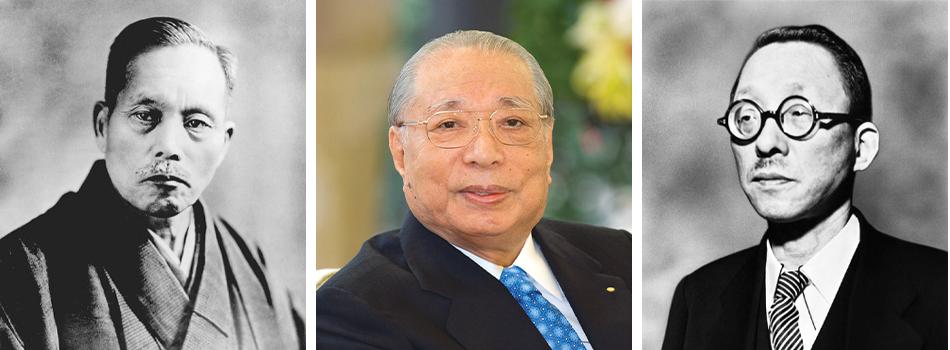
The Three Presidents of Soka Gakkai — Makiguchi, Toda, and Ikeda — who carried forward and transmitted the Gosho teachings

The Three Presidents of Soka Gakkai

Makiguchi, Toda, and Ikeda each deepened the study and transmission of the Gosho — carrying Nichiren's writings from 13th-century Japan into a living, global practice.

The Sado Exile (1271–1274)

Three of the five major writings — the Opening of the Eyes, the Heritage of the Ultimate Law of Life, and the Object of Devotion for Observing the Mind — were composed during Nichiren's two-year exile on Sado Island. Cut off from his followers in harsh conditions, he wrote extensively, transforming personal suffering into universal Buddhist teaching. For SGI members, this period embodies the principle that our deepest challenges can become our greatest source of wisdom.

The Gosho and the Lotus Sutra

The Gosho cannot be understood in isolation from the Lotus Sutra, which Nichiren considered the supreme teaching of Shakyamuni Buddha. Four key Lotus Sutra concepts pervade the Gosho:

Universal Buddhahood

Every being, without exception, can attain enlightenment — regardless of background, gender, or circumstance.

The Eternal Buddha

Buddhahood is not a distant goal but an ever-present reality inherent in every moment of life.

The Bodhisattva Way

The commitment to work for the happiness of others alongside one's own awakening — the heart of SGI practice.

The Treasure Tower

A metaphor for the dignity and inestimable worth inherent in every human life — the foundation of humanistic Buddhism.

How to Study the Gosho

For Individual Study

  1. 1

    Read the background section first.

    Every Gosho in the Nichiren Library includes a background section explaining who the recipient was and the circumstances. This context transforms doctrine into personal guidance.

  2. 2

    Read slowly and repeatedly.

    The Gosho is dense. Read a passage, sit with it, and return to it over days or weeks. Meaning deepens with each reading.

  3. 3

    Connect it to your life.

    Ask: What was the recipient going through? How does this relate to my own challenges? What is Nichiren encouraging me to do?

  4. 4

    Use Daisaku Ikeda's lectures.

    Ikeda's lectures on the Gosho, published in Living Buddhism and in book form, provide accessible commentary bridging 13th-century Japan and today.

For Group Study (Discussion Meetings)

  1. 1

    Choose a passage or short writing.

    Select something appropriate for the group's experience level. A few lines can generate an hour of rich discussion.

  2. 2

    Provide the historical background.

    So everyone understands the context — who the recipient was, what they were going through, what Nichiren was enduring at the time.

  3. 3

    Discuss practical application.

    Not just what Nichiren said, but how it applies to members' lives today. The Gosho was never meant to be purely academic.

  4. 4

    Share personal experiences.

    Invite members to share moments when a particular Gosho passage came alive through their own practice.

Resources for Gosho Study

Continue Your Study

Deepen your understanding of the core philosophy behind the Gosho, or take the first step and learn to chant.

Share:

This guide was compiled for SGI-USA Las Vegas (sgi-vegas.org) as a resource for members and visitors seeking to deepen their understanding of Nichiren Buddhism through Gosho study. All Gosho texts referenced are available at nichirenlibrary.org.