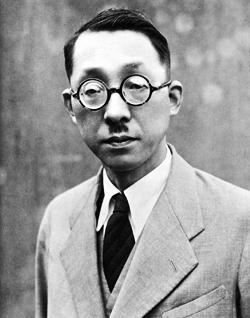
Josei Toda (1900–1958) was Makiguchi's closest student and the second president of Soka Gakkai. He was also one of the most remarkable comeback stories in the history of Buddhism, maybe in the history of anything.
When the Japanese government arrested Makiguchi during World War II for refusing to worship at Shinto shrines, Toda went to prison right alongside his teacher. He spent two years locked up. Most people would have given up on everything. Toda did the opposite.
While in prison, Toda chanted millions of Nam-myoho-renge-kyo. He read the Lotus Sutra over and over. And somewhere in that dark, cramped cell, he had a realization so powerful it changed his life, and eventually millions of other lives: every single person is a Buddha. Not just holy people. Not just the lucky ones. Everyone. Even him. Even you.
After the war, Toda walked out of prison and basically started over from scratch. The organization was nearly gone. But he had a mission. Think of it like rebuilding a burned-down house with your bare hands, except the house turned into a mansion.
He coined the phrase “human revolution”: the idea that when one person changes on the inside, it changes everything around them too. Like a pebble dropped in a pond. One person becomes happier, stronger, kinder, and the ripples go out into their family, their neighborhood, their city, their world.
By the time Toda passed away in 1958, the Soka Gakkai had grown from a handful of people to 750,000 households. He left behind a movement, a vision, and a student named Daisaku Ikeda who would carry it to the entire world.